The Tray, Reconsidered: Accessories That Keep Their Composure at Security
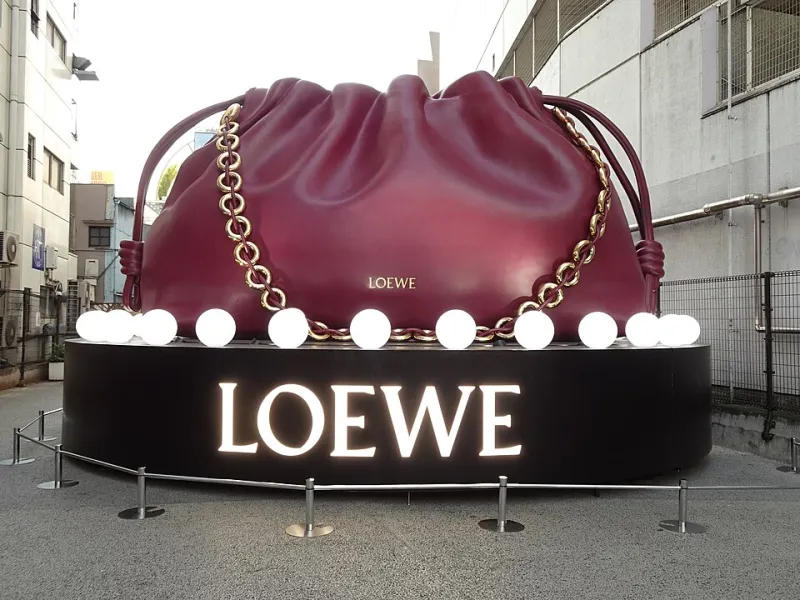
Photo: RuinDig/Yuki Uchida, CC BY 4.0, via Wikimedia Commons
An Unlikely Auditor
There are few moments less glamorous than the airport security check, and fewer still that ask quite so much of an accessory. A belt must be removed without theatre. A watch must leave the wrist without becoming a small emergency. A pouch of rings, cufflinks and coins must remain a pouch rather than a scatter of evidence across a grey plastic tray. The process is not designed to flatter, which is precisely why it is useful. Under pressure, an accessory reveals whether it was chosen with composure or merely with enthusiasm.
The point is not to optimise the security queue. It is to consider how a well-chosen piece behaves when it is asked to step outside its usual setting. The tray is a temporary stage, but the qualities it exposes — secure fastenings, sensible proportions, contained small pieces — are the same qualities that make an accessory worth owning in the first place.
The Belt: A Clean Removal
A belt is often the first casualty of the security ritual. A heavy buckle, a stiff strap or a complicated fastening turns a simple request into a small performance. The more considered approach is a belt that can be removed in one motion and folded into the tray without losing its shape. Bridle leather, cut cleanly and finished without excess hardware, tends to answer this requirement well. So does a buckle that is substantial enough to feel secure but not so large that it becomes the point of the belt.
This is not an argument for anonymity. It is an argument for proportion. A belt that behaves well at security is likely to behave well in a restaurant, in a car and in the ordinary course of a working day. The tray merely confirms what the mirror has already suggested: that the piece was designed to serve the wearer rather than to interrupt him.
The Wrist: One Watch, Fewer Decisions
Watches and jewellery present a different test. A metal bracelet can be slow to remove; a cluster of rings and chains can turn a tray into a small inventory. The quiet solution is not to travel with nothing, but to travel with fewer decisions. One watch, chosen for its strap and clasp, is usually enough. A leather strap with a simple pin buckle is easier to manage than a complicated deployant, and a watch that sits close to the wrist is less likely to catch on a sleeve or a tray edge.
Jewellery benefits from the same discipline. A single signet ring, a pair of small studs or a fine chain may be worn through security where local rules permit, but the more reliable approach is to place small pieces into a dedicated pouch before the queue begins. The aim is not to hide them but to keep them together. A clasp that opens easily is a pleasure in daily life and a liability in a tray; a clasp that requires deliberate effort is the quieter choice.
The Pouch: Containment as a Virtue
Small accessories have a way of becoming smaller under pressure. Cufflinks, collar stiffeners, a spare watch strap, a pair of studs: each is manageable on its own, but together they invite the scramble that security trays seem to specialise in. A zip pouch in firm leather or a compact travel folio solves this without introducing clutter. The pouch should be large enough to hold the pieces one actually carries, and no larger. It should open with a single pull and close with a sound that suggests it will stay closed.
The same logic applies to the card case and the key fob. A card case that holds too much becomes a wallet; a key fob that is too generous becomes a paperweight. The tray does not demand minimalism for its own sake, but it does reward containment. A piece that keeps its contents together is a piece that can be trusted in transit.
The Soft Accessories: Scarf, Gloves, Umbrella
Soft accessories are less often removed at security, but they still participate in the ritual. A scarf should fold into a tray without shedding its shape; a pair of gloves should be capable of being placed together rather than separately. An umbrella, if it travels, should be slim enough to stand beside a bag rather than become a separate burden. These are small considerations, but they contribute to the same impression: that the traveller has thought about the journey as a whole.
For a UK-to-Europe itinerary, the practical edit is modest. A single leather belt in a dark neutral. One watch on a leather strap. A zip pouch for small pieces. A card case that holds only the cards in use. A scarf in a colour that works with the coat rather than against it. Gloves that can be paired without fuss. None of these pieces announces itself as travel equipment. That is the point. They are simply accessories that happen to travel well.
The Arrival Test
The security tray is not the whole journey, but it is a useful proxy. An accessory that emerges from the tray unbuckled, unbothered and intact has already passed a test that no shop window can replicate. It has demonstrated that it can be handled, contained and restored to its place without drama. In a market full of pieces designed for the photograph, that is a quiet distinction.
The better question, then, is not whether an accessory will survive airport security. It is whether it will behave with the same composure once the journey is over. The tray merely makes the answer visible.