Grit, Slush and Suede: A Winter Protocol for Textured Accessories
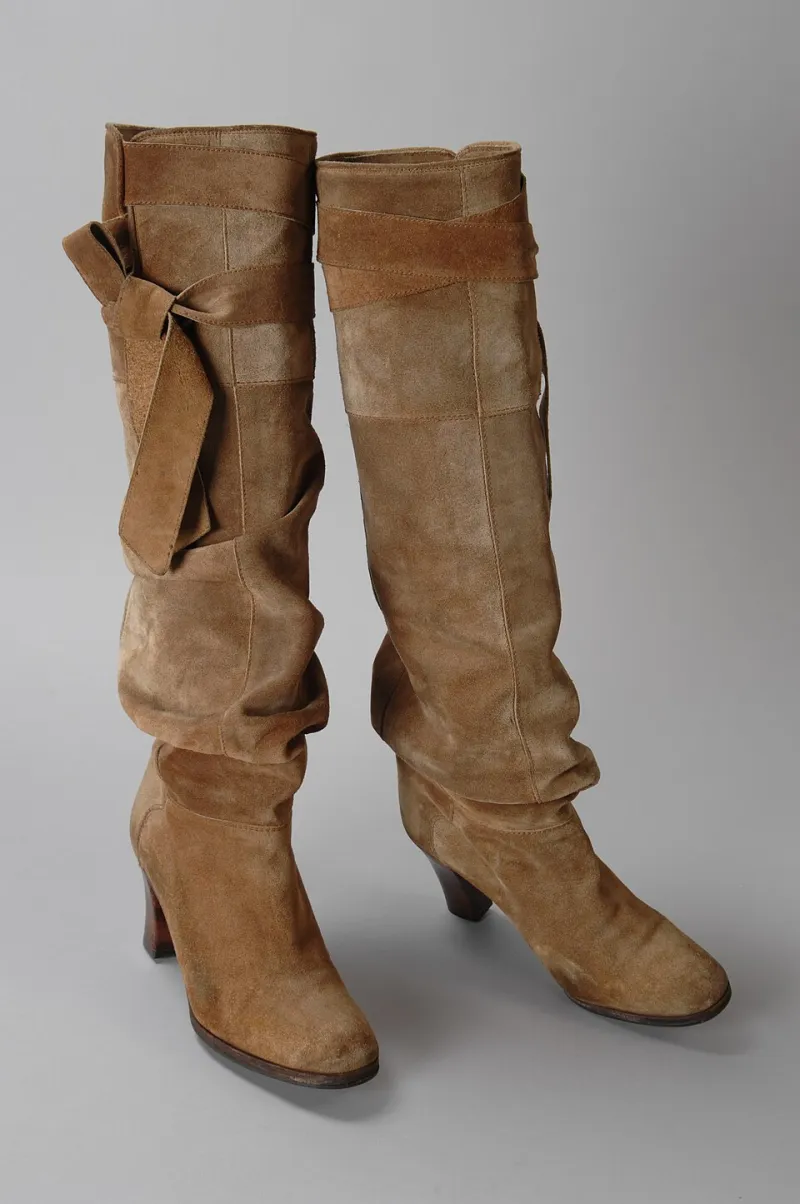
Photo: Madras, CC BY-SA 3.0, via Wikimedia Commons
There is a moment, somewhere between the first frost and the first thaw, when the pavement turns against the shoe. Gritting lorries have done their work, the kerb is a grey slurry, and every step carries a fine white dusting of salt that settles into nap, stitching and welt. Suede and nubuck tolerate a great deal; what they do not tolerate is neglect dressed up as carelessness. The difference between an accessory that returns each November and one that quietly retires to the back of a cupboard is rarely the leather itself. It is the protocol around it.
Salt Is Not Merely Water
The instinct to treat a salt mark as a water mark is understandable and, in practice, misleading. Rain dampens the surface and dries; salt attacks it. The grit spread across British roads is typically a blend of sodium chloride with smaller proportions of calcium and magnesium chloride, and those secondary salts are hygroscopic — they pull moisture from the air long after the slush has gone. Left in the nap, they keep the leather damp, draw out the natural oils that give suede its suppleness, and dry to a pale, chalky tide line that looks like bloom but behaves like a burn. A water mark is a memory. A salt mark is an active process.
That distinction governs everything that follows. Water damage is largely a matter of drying correctly. Salt damage is a matter of neutralising, then restoring.
Before the Door
Protection is unglamorous and disproportionately effective. A fluoropolymer-based protector, applied to clean, dry suede in two light passes rather than one heavy one, gives the nap a breathable barrier that buys time in a downpour. Two thin coats, twenty minutes apart, left overnight to cure, will outlast a single drenching. Silicone sprays are best avoided: they seal the surface, darken the colour unevenly and make any later repair markedly harder for whichever atelier inherits the problem.
Nubuck, with its finer, more closely sanded surface, benefits from the same treatment but rewards a lighter hand — a single coat is often sufficient, and over-application can flatten the nap into something that resembles calfskin and never quite recovers its texture.
It is also worth being honest about rotation. Few accessories are asked to endure five consecutive days of pavement. Alternating two pairs of boots or two bags across the week gives each piece forty-eight hours to dry and be attended to, which is the single most useful thing anyone can offer textured leather in January.
The Return Protocol
The correct sequence upon coming in from the street is dull, and it works. Remove loose matter with a soft brush while the piece is still dry — salt sitting on the surface is a nuisance, salt worked into the nap is a repair. Do not place suede near a radiator, a boiler cupboard or an Aga; heat drives moisture through the leather and hardens the fibres in a way that no brush will undo. Stuff boots with unprinted paper to hold the shape and leave them in a well-ventilated room, away from direct sun.
Once dry, brush the nap back in one direction with a brass or crepe brush, using short, lifting strokes. For a tide line that has already formed, a cloth wrung out in a solution of one part white vinegar to four parts cool water can be dabbed — not rubbed — along the edge, working from the outside of the mark inwards to avoid spreading the ring. Blot immediately, dry naturally, and brush once more when fully dry. Vinegar is mildly acidic and will help neutralise the alkaline residue; it is not a cure for leather that has already lost its oils.
For nubuck, skip abrasion entirely. A suede eraser used with almost no pressure, followed by a soft brush, is the extent of what should be attempted at home.
Where the Kit Stops
At-home care addresses the surface. A specialist atelier addresses the structure, and the distinction matters when deciding where to spend.
Salt that has been left through several wet-dry cycles will often leave a permanent pallor in the nap, indicating that the dye has migrated rather than merely stained. Reconditioning oils, applied unevenly, can darken suede beyond recovery — a common consequence of well-intentioned kits. Where the mark has hardened into a crust, where the nap has flattened in patches, where contrast panels or a lighter lining show salt bleed at the seams, or where a bag's edge paint has lifted from repeated soaking, the appropriate response is a workshop rather than a shelf of products.
Established British repair houses will re-dye, re-nap and recondition; they will also replace a welt, re-stitch a handle, or reinstate edge finishing that no spray can approximate. The economics are more favourable than they appear. A reconditioning that costs a fraction of the original purchase extends a piece by years, and it preserves the patina that makes a well-chosen accessory worth owning in the first place.
Timing deserves thought. Winter is the atelier's busiest season, and a piece handed over in February may not return until well into spring. Those who send their boots and bags in November — before the worst of the weather, not after — tend to see them again within a fortnight.
The Long View
Suede is not a fair-weather material. It is a material that rewards attention, and the pale scuff on a three-year-old boot is not evidence of failure but of use. What separates a considered wardrobe from an expensive one is the willingness to spend ten minutes at the door, to keep a brush where the umbrella lives, and to recognise the point at which patience gives way to expertise. The pavement will do what it does. The protocol is what we choose.