The Unseen Spine: Why a Considered Belt Still Matters
The belt is the least theatrical piece in a wardrobe, which is precisely why it deserves attention. It does not announce itself as a bag or a scarf might. It works at the waistband, at the join between jacket and trouser, at the point where a casual outfit either looks deliberate or merely assembled. In a wardrobe built on understated luxury, that quiet structural role matters more than surface decoration.
The function before the flourish
A good belt has a job to do. It should hold trousers at the intended rise, support the weight of denim without bowing, and sit flat beneath a jacket without creating bulk. When it does that well, it disappears into the outfit. When it does not, the effect is persistent: a waistband that twists, a prong that misses its hole, a buckle that catches the light too eagerly.
The first test is therefore not aesthetic but practical. Fasten the belt on the middle hole and check that the tail is neither excessively long nor so short that it barely reaches the first loop. A generous range of holes is useful, but a belt cut to the correct size is better. Measure an existing belt from the buckle to the hole most often used, then compare that figure with the maker's guidance. It is a small discipline that prevents years of mild irritation.
Reading the leather
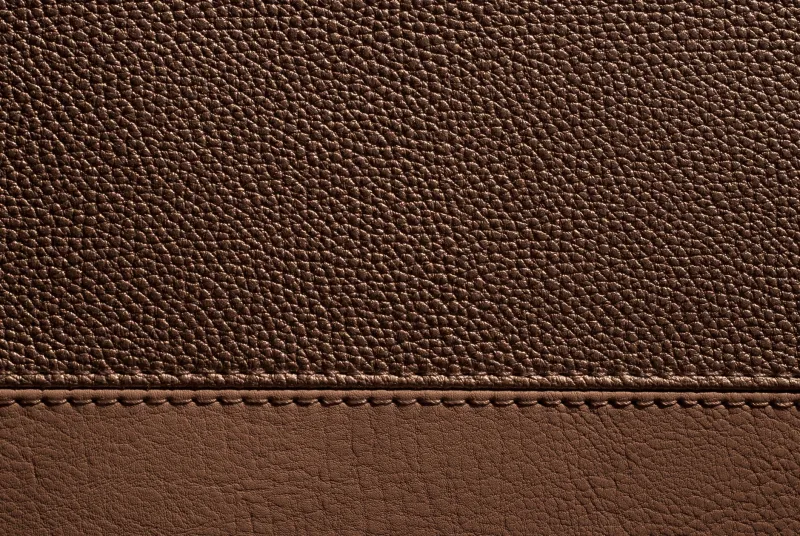
Leather is where a belt reveals its likely lifespan. Full-grain leather, with the natural surface left intact, tends to develop a patina rather than crack or peel. Vegetable-tanned hides often begin firm and slightly matte, then soften with wear into something more personal. Corrected-grain leather can look uniform and polished, but it may conceal lower-grade material beneath a processed surface.
Look closely at the edges. A well-finished belt has edges that are neatly burnished, painted or stitched according to the maker's house style. The finish should be even, with no rough patches or excess wax. Stitching should be tight and consistent, and the leather around the buckle should feel substantial without being rigid. A belt that flexes easily at the buckle but remains firm through the body is likely to wear well; one that feels spongy throughout may soon stretch.
Linings deserve a glance, too. Some belts are unlined for flexibility, while others use a second layer of leather for body and neatness. Neither approach is inherently superior, but the two layers should sit together without bubbling or separation. A belt is a simple object, and its quality is usually visible in the small places a hurried buyer overlooks.
Width, proportion and the line of the trouser
Width is the most useful variable in a belt wardrobe. A narrow belt of around 2.5cm to 3cm suits finer tailoring, dress trousers and lightweight suits; it keeps the waistband looking clean without adding visual weight. A belt of 3.5cm to 4cm is more at home with denim, chinos and heavier cotton trousers, where it can support the fabric and balance the scale of the outfit.
A single mid-width belt can serve both worlds, but it will always be a compromise. The more considered approach is to choose one belt for tailoring and one for casual wear, rather than asking a single strap to perform two different jobs. In Britain, where a wardrobe may move from a City suit to a weekend in the country, that distinction is practical rather than precious.
Colour should follow the same logic. Black remains the natural companion to formal leather shoes and dark tailoring. Dark brown, oxblood and deep tan work with navy, grey, olive and denim. A belt need not match shoes exactly, but it should share a similar depth of tone. The old rule of exact matching is less useful than a sensible conversation between the two.
Buckle finish: the quiet signature
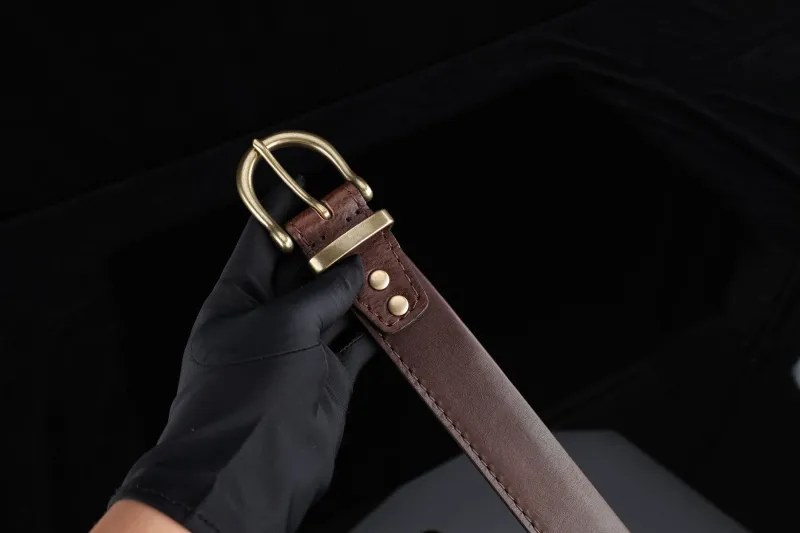
A buckle is the belt's only real ornament, so restraint pays. Solid brass, stainless steel and well-finished nickel are preferable to lightweight plated metal that flakes or dulls unevenly. The prong should move smoothly and sit centred in the frame. The buckle should feel balanced in the hand, neither hollow nor unnecessarily heavy.
Finish matters as much as material. A brushed or matte buckle reads quieter than a high-polish one and is less likely to dominate a formal outfit. For daily wear, a simple rectangular frame in a muted finish will outlast a logo buckle or a fashion-shaped piece. The latter may have its moment, but it dates the belt in a way that a plain frame never does.
Trend-led versus built to last
Trend-led belts tend to announce their season through scale, hardware or branding. Exaggerated widths, oversized buckles and distressed finishes can look compelling in a photograph, yet they often struggle in a real wardrobe. They demand particular trousers and a particular mood. A belt built for years does the opposite: it becomes more useful as it becomes less noticeable.
The difference is not simply price. It is construction, proportion and the discipline of the design. A belt with a conservative width, solid hardware, tidy stitching and a leather that improves with wear is likely to remain in service long after a novelty piece has been relegated to the back of a drawer. In a wardrobe that values longevity, that is the better investment.
A short UK edit
For readers building a considered collection, the British market offers several sensible starting points. Tanner Bates in Devon makes belts in a workshop setting with an emphasis on traditional leatherwork; Ettinger in London brings a heritage leather-goods approach to classic frames; the British Belt Company offers a broad range of UK-focused styles across formal and casual widths. Smaller saddlers and repair ateliers are also worth consulting, particularly for made-to-measure lengths and replacement buckles.
When shopping, ask about the leather's origin and tannage, the buckle material and whether the belt can be shortened or repaired. A maker who can answer those questions clearly is usually a maker worth buying from.
The discipline of one good belt
The belt is not the piece that makes an outfit memorable. It is the piece that keeps the outfit composed. In a wardrobe of quiet luxury, that is a valuable role: unseen for most of the day, relied upon at every hour, and judged only when it fails. Choose leather with integrity, a width suited to the trousers it will serve, and a buckle that resists performance. The result is not a statement. It is something better: a quiet foundation that holds everything else in place.