A Nose for Restraint: Scent, Storage and the Considered Accessory

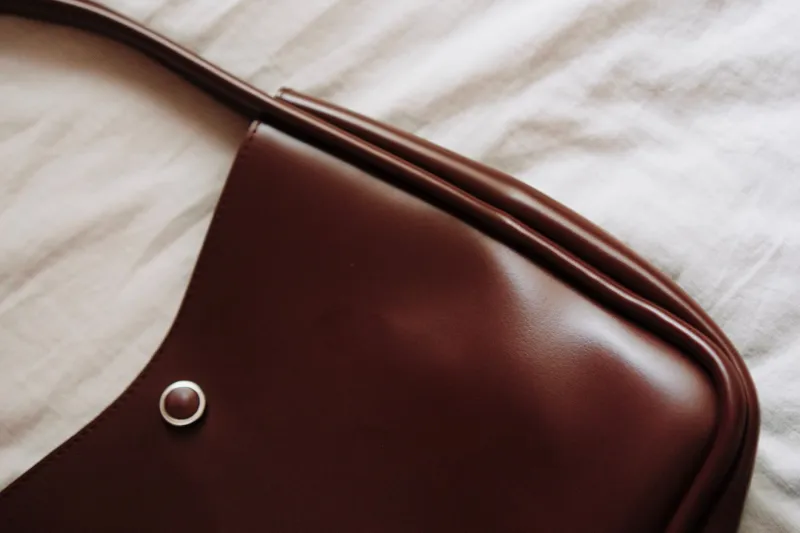
Photo: vegetable tanned leather bag dust bag still life close up, via i.pinimg.com
Walk into a well-kept accessories department and the eye begins its audit: stitch density, edge paint, the fall of a strap. But the nose has already voted. Before the label is turned or the price confirmed, an accessory has announced itself through the air it occupies — not with perfume, but with material. That first, quiet introduction is one of the most honest tests available to a discerning buyer, and one of the least discussed.
The Honest Scent of Material
Good vegetable-tanned leather rarely shouts. It smells dry and faintly sweet, with a tannic edge that recalls oak bark, tea leaves or a saddler's workbench. The aroma is present but contained; it does not follow you across the room. Wool linings smell of fibre and lanolin, cotton of clean cloth, silk of very little at all. Brass hardware may carry a thin metallic note, and a cedar shoe tree will do exactly what it says on the tin. These are the smells of materials being themselves.
That restraint is the point. A considered accessory does not need to be perfumed to seem expensive. Its scent is a by-product of honest production — of tannins, oils and waxes rather than solvents and cover-ups. In a British climate, where damp is a constant adversary, that honesty is also practical: natural materials that smell clean tend to be materials that have been stored and finished with some care.
When Scent Becomes a Warning
A sharp, acrid or petroleum-like smell is rarely a good sign. It may point to aggressive chemical finishing, solvent-based adhesives or a lining that has been sealed rather than allowed to breathe. Heavy, sweet fragrance is another caution. A new bag that smells powerfully of 'leather' — in the way a car air freshener smells of 'pine' — may be wearing a disguise. The same applies to gloves that arrive reeking of cologne and scarves that carry a wall of scent. Fragrance can be charming in small traces; as a primary ingredient, it is often a distraction.
Damp is the more insidious culprit. Mustiness, wet paper and cellar air suggest storage in a humid cupboard, a basement or against an external wall. On vintage pieces, mildew is not patina. Nor is cigarette smoke, however romantic the story attached to it. Perfume residue in a lining can be a pleasant ghost of previous ownership, but only if it has faded to a whisper. If it still announces itself across a room, the piece has not been kept with the care its materials deserve.
A Test of Patience, Not Theatre
The useful test is not a theatrical sniff in the middle of a shop. It is a slower exercise. Open the bag, the glove or the scarf box and wait a moment. Breathe normally. Then smell the lining, the interior pocket and the strap. A well-made piece should smell of itself, not of its packaging or its marketing. If the scent intensifies rather than settles, that is information. If it disappears entirely after a few minutes of air, so much the better: the material is clean enough to be neutral.
Ask how the piece has been stored. A good salesperson will not be offended; a great one will have an answer. For vintage, ask whether the lining has been cleaned and whether the scent is original to the piece. Reputable dealers will tell you the difference between a leather that has aged gracefully and one that has simply been kept badly.
Storage That Lets Materials Breathe
The simplest way to protect an accessory's scent is to let air move around it. Breathable cotton dust bags are preferable to plastic, which traps moisture and concentrates odours. Avoid airtight boxes for anything that has been worn or handled. Cedar blocks can deter moths without overwhelming a wardrobe, but scented sachets should be used sparingly; the aim is neutrality, not a boutique in a cupboard. Silica gel has its place in a damp climate, but it should be checked and replaced, not left to become a permanent fixture.
In a British home, position matters. Keep leather away from external walls, cellars and radiators. Rotate bags so that one is not pressed against a dark cupboard floor for months. Dry wet gloves naturally, away from direct heat. Air scarves before storing them and use acid-free tissue for folds. These are small disciplines, but they are the difference between an accessory that smells considered in five years' time and one that smells of neglect.
The Verdict Before the Label
Scent is not a substitute for craftsmanship, but it is a useful witness. It tells you whether a material has been finished with restraint, whether a lining has been allowed to breathe, whether a piece has been kept in conditions that respect it. The label may tell you what something costs; the air around it tells you how it has been made and kept. For the understated wardrobe, that is a quiet advantage worth cultivating — a nose for restraint, trained one considered accessory at a time.