A Small Weight: How the Brooch Finishes a British Coat
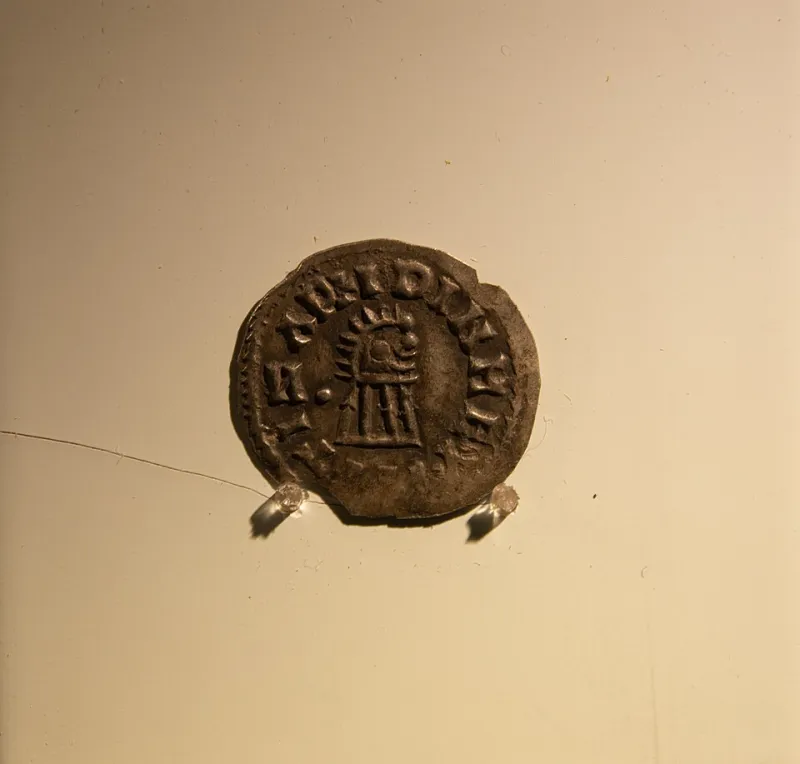
Photo: Dorieo, CC BY-SA 4.0, via Wikimedia Commons
The brooch has an unusual position in British dress. It is old enough to feel ceremonial, small enough to be overlooked, and personal enough to resist fashion's usual cycles. On the lapel of a winter coat, it can finish a look with a single point of weight. On a scarf, it can hold fabric and attention without raising its voice. Yet it is also an accessory that can go badly wrong: too large, too bright, too busy, or placed as an afterthought. The difference between a brooch that completes an outfit and one that turns it into costume lies in a few quiet decisions.
A long memory, lightly worn
The brooch has been used in Britain for centuries as both fastener and ornament. Before the modern safety pin and the zipper, pins and clasps held clothing together; the decorative brooch grew from that practical ancestry. By the nineteenth century, it had become a language of its own: mourning brooches, cameo pins, enamel badges, sporting and regimental examples. In the twentieth century, the brooch moved between daywear and evening wear, sometimes severe, sometimes playful. Its persistence is instructive. It is an accessory that can carry memory without becoming a memorial.
That history does not mean every brooch should look antique. It means the piece should acknowledge its own scale and purpose. A small pin with a clear stone or a plain knot of metal can feel entirely modern. A grand suite of stones can feel entirely right on the right coat. The error is not age or ornament; it is mismatch.
Scale before sparkle
Begin with size. A brooch should relate to the lapel, the scarf or the neckline it is asked to finish. On a tailored wool coat, a pin of roughly two to four centimetres across is often enough; on a heavy tweed, a little more weight may be needed to keep the fabric from pulling. On a silk scarf, a smaller and lighter piece is usually better, both visually and physically. A very large brooch can work, but it needs a generous lapel and a confident wearer; it should not be chosen simply because it is impressive.
Shape matters as much as diameter. A horizontal bar can echo the line of a pocket or a collar; a round or oval piece can soften a sharp lapel; a crescent or leaf can follow the curve of a scarf. Look at the back as carefully as the front. The pin mechanism should be strong, the catch secure, and the metal should not be so thin that it bends under its own weight.
Materials and making
Gold, silver, brass, steel, enamel, paste, semi-precious stones and pearls all have a place. The question is whether the material suits the use. A brooch worn on a coat will be exposed to rain, wool fibres and the occasional knock; a delicate setting may not survive daily wear. For regular use, look for a solid back, a firm hinge and a catch that closes with a clean click. Stones should be set securely, with no rattle.
Finish is the quiet tell. Plated metal can look bright at first and tired later; solid brass or silver will age more honestly. Enamel should be smooth at the edges, without chips or cloudy patches. Pearls should sit firmly in their settings and should not be glued into place if the piece is meant to last. None of this requires a famous name. It requires a close look.
Placement, and the question of costume
The most common mistake is placement without purpose. A brooch pinned at random on a coat can look like a lost object. It should have a reason: to secure a scarf, to draw the eye along a lapel, to mark the closure of a jacket, or to add a point of light near the face. On a double-breasted coat, a single pin on one lapel is usually enough. On a scarf, place it where the fabric naturally folds, not where it fights the drape.
Costume begins when the brooch is asked to do too much. If the coat already has a strong check, a large patterned pin may compete. If the scarf is brightly printed, a simple metal piece will often be more persuasive. The understated approach is not to avoid ornament but to give it one clear task. A small brooch that holds a scarf in place is doing real work; that practicality makes it look settled.
Heirloom and auction finds
Some of the best brooches are not new. Auction houses, antique fairs and provincial jewellers often hold pieces with better materials than their price suggests. Look for a clear hallmark where possible, and ask about repairs. A replaced pin or a later catch is not necessarily a problem, provided it has been done well. Avoid pieces with obvious solder scars, loose stones or a mechanism that feels gritty.
An heirloom brooch carries a different kind of weight. It may not suit every coat, and it need not. The point is to wear it, not to preserve it in a drawer. A small pin inherited from a grandparent can be cleaned, checked by a jeweller and worn on a plain lapel with complete conviction. Its history is part of its finish.
Care, and the long view
Keep brooches away from perfume and hairspray, and wipe them with a soft dry cloth after wearing. Store them separately, ideally in a lined box or a soft pouch, so that pins do not scratch other pieces. Check the catch periodically. If a stone is loose, stop wearing the piece until it is repaired. These are small habits, but they are what allow a brooch to be worn for decades rather than seasons.
In 2026, when accessories often compete for attention, the brooch offers something rarer: a small, deliberate weight. It can finish a British coat with a point of memory and material, and it can do so without turning the wearer into an exhibit. Chosen with care and placed with reason, it is proof that the quietest accessory in the room can also be the most complete.