Six Quiet Completions for the Festive Calendar
As November 2026 settles into its familiar rhythm of early dusk and damp pavements, the British festive calendar begins to take shape. There are Thursday office drinks in the City, a Saturday lunch in the Cotswolds, a carol service in a cold church, and the long, glittering passage from Christmas Eve to New Year's Eve. The wardrobe that carries a woman through these occasions rarely depends on a single statement piece. It depends on finish: the glove that closes a coat sleeve, the scarf that softens tailoring, the bag that is small enough for a taxi yet serious enough for a restaurant. The following six accessories are not seasonal novelties. They are quiet completions, chosen for their ability to work hard, look restrained and justify their place in the wardrobe well beyond January.
1. Cashmere-lined leather gloves
A pair of well-cut leather gloves is the most British of winter accessories because it answers a specifically British problem: cold that is rarely extreme but often wet, windy and prolonged. Look for a close fit at the wrist, a soft leather that will crease rather than crack, and a cashmere or silk lining that adds warmth without bulk. Black is the obvious choice; dark brown is the more interesting one, particularly against camel, grey or navy wool. Avoid contrast stitching, oversized bows and hardware that catches on coat pockets. The ideal glove is almost invisible until someone notices how neatly it finishes the sleeve. Worn daily from November to February, a good pair can reduce its cost per wear to a few pounds, while cheap gloves that split at the seam rarely survive a single winter.
2. A fine-gauge scarf
The festive scarf should not be a blanket. A fine-gauge scarf in merino, cashmere or a silk-wool blend sits close to the neck, slides under a coat collar and can be worn indoors without overheating. Choose a narrow, elongated shape in a neutral tone: oatmeal, charcoal, burgundy or a muted olive. It can be looped once over a tailored coat for office drinks, draped over a knit for Christmas lunch, or tucked into the neckline of an evening jacket. The point is adaptability. A chunky scarf may be warmer, but it rarely looks polished beside a velvet collar or a silk shirt. A fine-gauge scarf is the accessory equivalent of a lowered voice: it does not demand attention, yet it makes the whole outfit seem considered.
3. A structured clutch
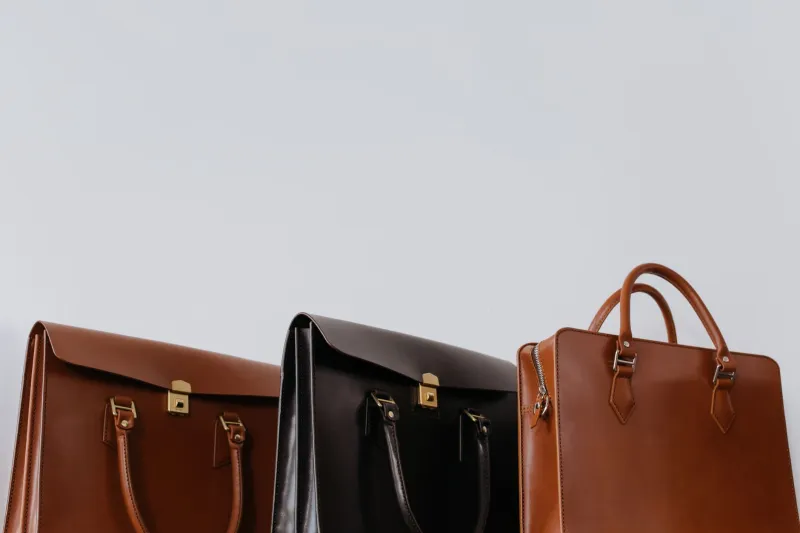
For office drinks that turn into dinner, a structured clutch in smooth leather is more useful than it first appears. It should be large enough for a phone, a card case, a lipstick and a key, but rigid enough to sit upright on a restaurant table. Look for a clean flap, a discreet clasp and a lining that does not look like an afterthought. Black, navy or deep green will work with tailoring and with dresses. Avoid embellishment that dates quickly; a plain leather clutch can be carried for years, while a sequinned or beaded piece often feels tired by the second season. If the clutch comes with a slim, detachable strap, so much the better: it can be worn across the body for the walk from station to restaurant, then tucked inside for the table.
4. A compact evening bag
New Year's Eve is where otherwise sensible wardrobes become tempted by novelty. Resist the miniature novelty bag and choose a compact evening bag with a proper closure, a secure lining and room for the essentials. A top-handle bag in black leather, a small shoulder bag in a muted metallic, or a simple envelope shape in deep burgundy will serve for years of December evenings. The test is whether it looks right with a wool coat as well as a silk dress. If it only works with one outfit, it is not an accessory; it is a costume. A compact evening bag should feel like a quiet punctuation mark, not the sentence itself.
5. A slim leather belt
Christmas lunch is often a matter of knitwear, and knitwear benefits from a little structure. A slim leather belt, around two centimetres wide, with a small, plain buckle, can define a cardigan, hold a midi skirt in place or add a finish to a simple dress. Black and dark brown are the useful colours; a polished buckle in brushed gold or silver should be quiet enough to wear with jewellery. Avoid wide statement belts and oversized logos. The slim belt is a tool of proportion, not decoration. It also earns its keep across the year, from spring tailoring to summer linen, which makes its cost per wear almost negligible.
6. Classic earrings
No festive edit is complete without a piece of jewellery that works from morning to midnight. Pearl studs, small gold hoops or a fine chain necklace are the most reliable candidates. They should be comfortable enough to forget and refined enough to catch the light without shouting. Costume jewellery can be fun, but it rarely survives the season with its finish intact. A pair of classic earrings, worn repeatedly, becomes part of the wearer's signature rather than a seasonal add-on. In the British winter, when skin is pale and clothing is dark, a small gleam at the ear is often all the decoration an outfit needs.
Styling the edit: a note on restraint
The common thread here is not a colour or a designer but a discipline. Each piece should work with at least three existing outfits and at least two occasions. The gloves should fit under the coat sleeve; the scarf should not fight the collar; the clutch should sit comfortably in the hand. Understated luxury is rarely about the object in isolation. It is about the way the object behaves in a real wardrobe, on a real evening, in a real British winter.
The arithmetic of cost per wear
A useful way to judge any festive accessory is to divide its price by the number of times it is likely to be worn. A pair of gloves worn every day from November to February may cost less per wear than a novelty bag carried once. This is not an argument for buying the most expensive option; it is an argument for buying the one that will be used. The six pieces above are chosen because they are repeatable. They do not depend on a particular trend, and they do not require a particular event to justify them.
Choosing quiet luxury over seasonal novelty
The temptation in December is to buy something that answers the season rather than the wardrobe. The better approach is to ask whether the piece will still look right in a January meeting, a February lunch or the following November. Quiet luxury is not a price point; it is a habit of editing. It prefers the glove that fits to the glove that glitters, the scarf that softens to the scarf that shouts, the bag that holds the evening together to the bag that merely announces it. In a British winter, polish is often a matter of a few well-chosen finishing touches. The rest is noise.