Mended, Not Replaced: The Quiet Case for Britain's Repair Ateliers
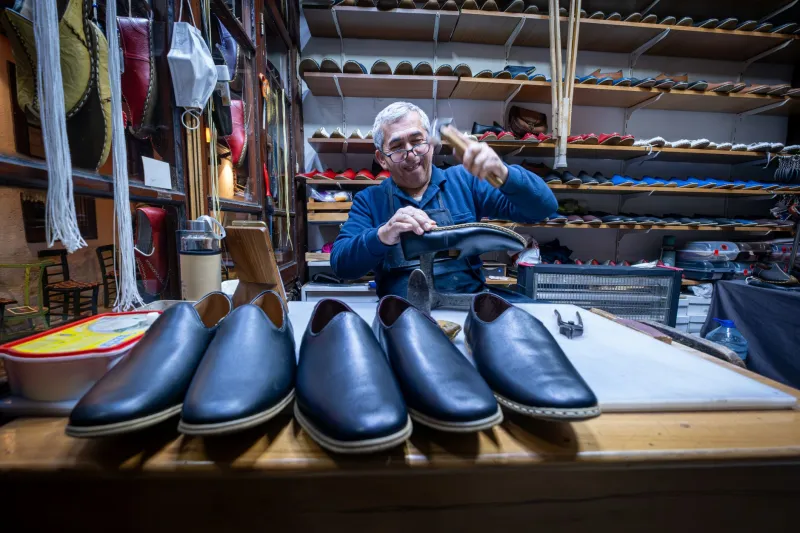
There is a particular sound in a good atelier: the low rasp of a burnishing tool, the tick of a needle through dense leather, the pause before a craftsman decides whether a seam can be saved. It is not a glamorous sound, and that is precisely the argument. In a market saturated with novelty, the most persuasive statement a buyer can make is not the acquisition of another object but the maintenance of an existing one.
The disappearance of the disposable luxury good
For roughly two decades, premium accessories were sold on an implicit promise of replacement. Seasonal colourways, limited drops and the theatre of the unboxing encouraged a short cycle: buy, display, move on. The economics of that model are now familiar, and so are its costs — material waste, thinning margins and a customer base increasingly fluent in resale value rather than longevity.
What has changed is not the availability of new things but the appetite for them. A generation of buyers raised on resale platforms has learned to read a bag's lining, a boot's welt and a clasp's plating. They know what a repair costs relative to a replacement, and they have begun to prefer the former — not solely on financial grounds, but because a repaired object carries a record that a new one cannot.
What an atelier actually does
Repair is a broad word for a set of highly specific skills. Shoe work divides into resoling, rewelting and the rebuilding of a heel stack; a good Northamptonshire workshop will return a welted boot to service several times before the upper itself becomes the limiting factor. Leather goods work is more varied: re-lining a bag whose interior has perished, re-stitching a handle, replacing a zip, refinishing a scuffed edge, re-plating or replacing hardware that has dulled.
Each of these is a decision, and the better ateliers are candid about which are worth making. A bag whose leather is sound and whose lining has failed is an excellent candidate. A bag repaired at a seam that will fail again in six months is not. The judgement is the service.
Patina, and the case against the pristine
There is a reason a well-kept bag from 2009 often looks more convincing than one bought last winter. Leather darkens and softens at the points of contact; hardware acquires a warm, uneven sheen; the structure relaxes into something closer to the wearer's own shape. This is not damage. It is evidence of use, and use is the only credential that cannot be purchased outright.
Visible care makes that evidence legible. A replaced sole, cleanly done, tells anyone who knows where to look that the owner has chosen to keep rather than to churn. In a room where the loudest signals are monograms and seasonal hardware, that is a quieter and considerably more impressive form of disclosure.
A short guide to commissioning work
Begin with an honest assessment rather than an enthusiastic one. Ask whether the item's construction permits repair — welted footwear and saddle-stitched leather goods generally do, while heavily bonded or moulded constructions may not. Request a written estimate and a realistic timeline; four to six weeks is normal for specialist work, and any atelier promising a week is either rushed or outsourcing.
Ask what will be replaced and what will be preserved. Original hardware, where sound, is usually worth keeping. Ask too for the work to be documented, even informally — photographs before and after are now standard among the better workshops and are useful when insuring or reselling. And resist the temptation to have everything refreshed at once; a bag that returns home looking new has lost something in the process.
Where to look in Britain
Britain retains a dense, if discreet, infrastructure for this work. Northampton's shoe workshops continue to service welted footwear from most major makers. London has leather specialists in Clerkenwell and around the older arcades, several of whom take postal work from across the country. Country saddlers — in the Cotswolds, in the Borders, in North Yorkshire — are often overlooked and frequently excellent on heavy leather and hardware. Regional repairers with a long relationship to a single maker are worth seeking out, since pattern and material knowledge travels poorly.
The economics, stated plainly
A full resole typically costs a fraction of a new pair of comparable boots; a reline or a hardware replacement is usually well under the price of a replacement bag of the same standard. But the arithmetic that matters is longer than a single year. An accessory repaired twice over fifteen years is, in real terms, cheaper than three indifferent replacements — and it is a better object at the end of the period than at the beginning.
The most understated signal
Luxury has spent a decade trying to become quieter. Logos have shrunk, palettes have muted, and the vocabulary of discretion has been adopted by nearly everyone. Against that backdrop, the genuinely quiet statement is not the absence of branding but the presence of maintenance: a bag with a relined interior, a pair of boots on their second sole, a clasp that has been repaired rather than swapped out.
These are not the marks of thrift. They are the marks of a buyer who has thought about time. In a market that rewards novelty loudly and constantly, choosing to keep something well is the least noisy and most convincing luxury gesture available.